The AI Takeoff
Playbook.
The constraint on AI value in your business is organisational design, not technology.
We have studied firms at the frontier of getting value from AI and distilled what they do into ten moves, in order. Sector, size and type are irrelevant — the dependencies are the same.
Each move exists because a first principle requires it. Skip one and you miss the dependency that makes the next one work. You can run this yourself, with your team.
Ten moves. Four phases. Two loops.
Trust precedes behaviour change. People act on what they believe is true, so the truth comes first, from you, in person.
Tell the workforce what is coming.
Whether the room leans in or hides. Expect roughly 10% leaners, 20% leaners-out, 70% wait-and-see. Note the surprises — they are your first signal.
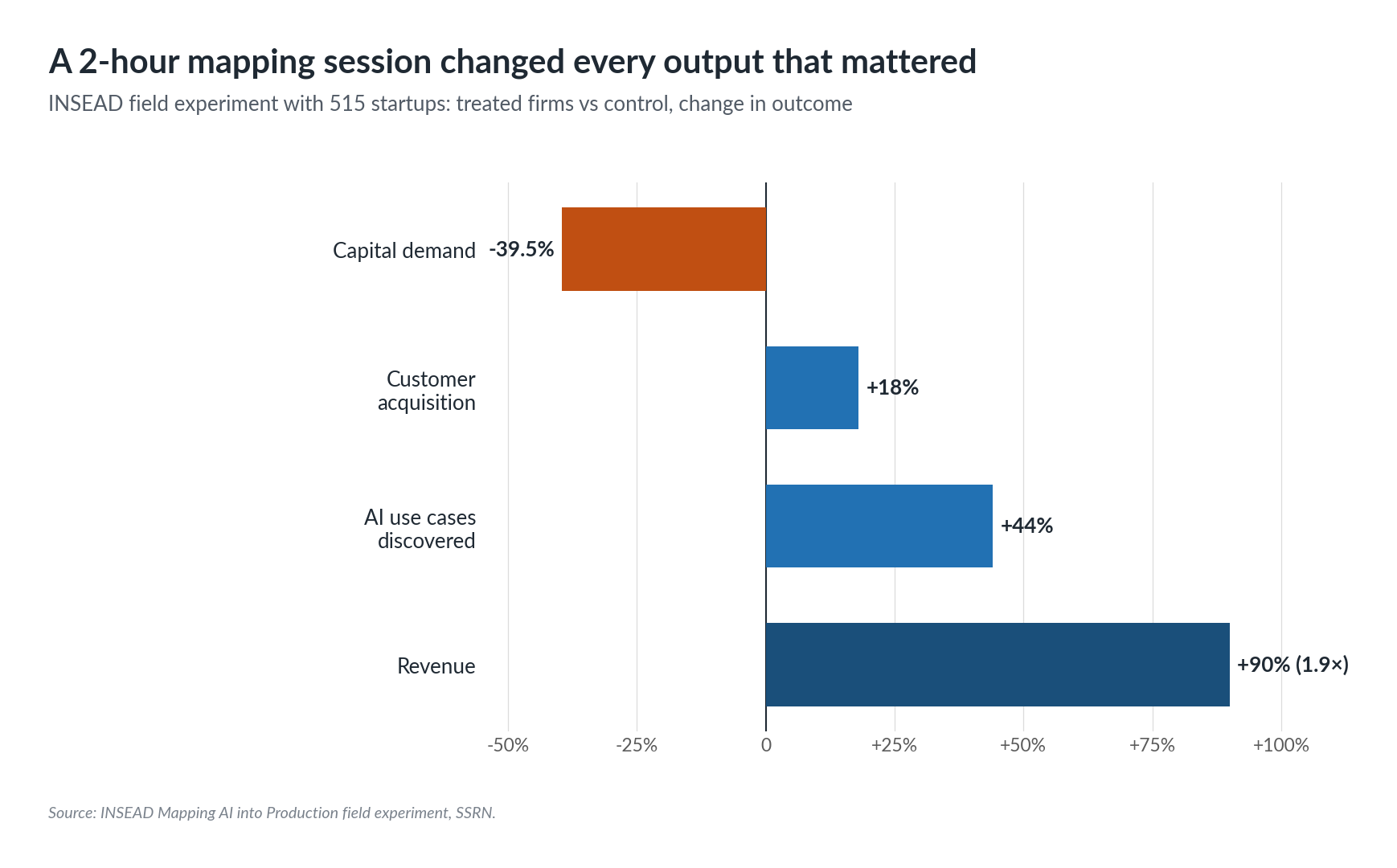
Workflows are the unit of value, tools are not. Each carries four costs: thinking, coordinating, doing and verifying. Map the work as it is actually done, not as the SOP says.
Map your cost.
One page. Workflows ranked by value at stake, with the dominant cost named in each. If the room cannot say where the time goes, you have just discovered the first thing to fix — and it is not an AI problem.
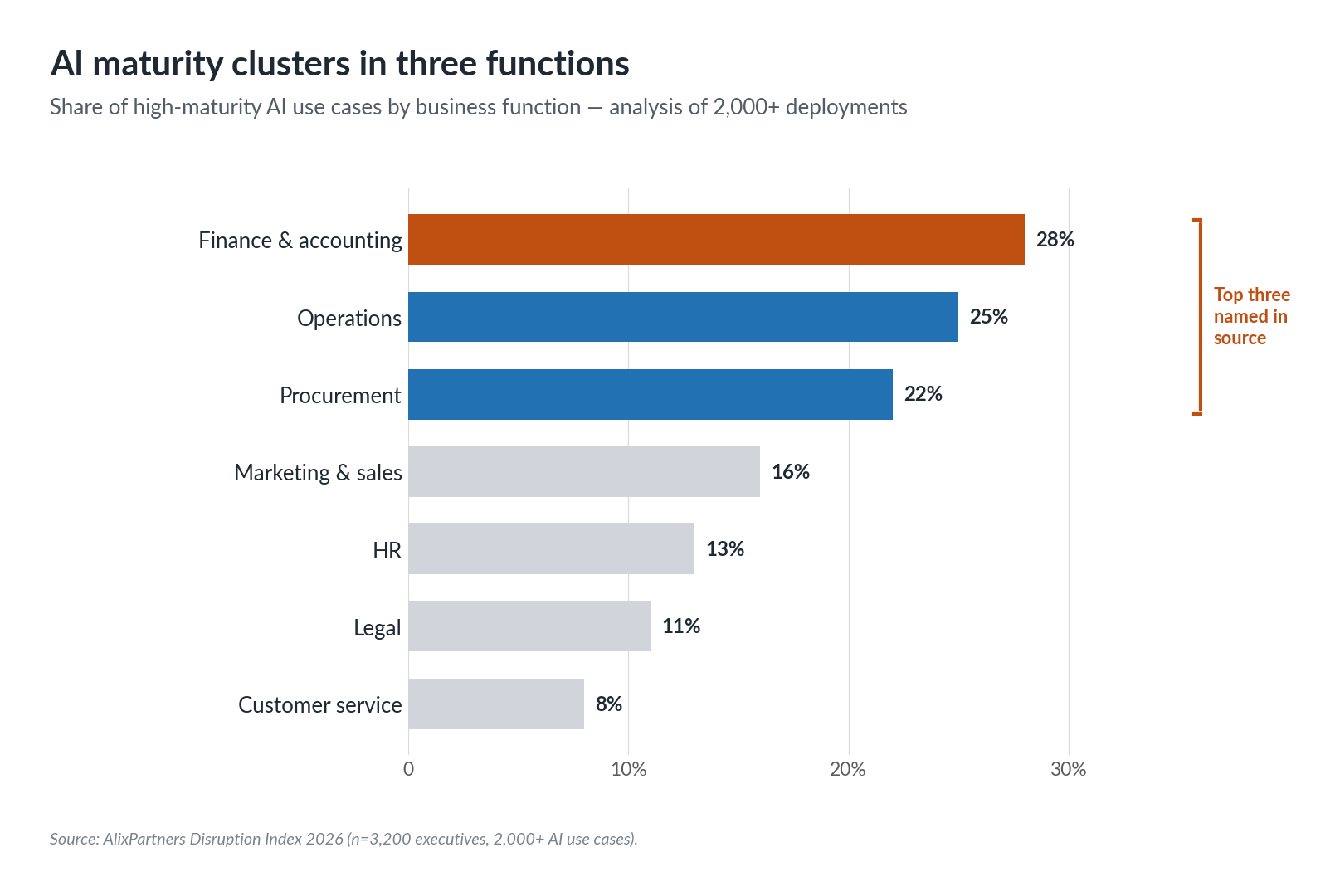
AI substitutes for synthesis, coordination and judgement exactly as far as the output can be verified. The writable target is the unit of delegation.
Pick the first workflow.
Lock the scope, the team, and a six-week clock. Resist the temptation to pick three. The benefit of going narrow is faster signal.
Choose your technical build resource — pick before Move 4 begins.
No-code AI tool, used directly by the workflow team.
Best for. A rebuild that fits inside one tool with prompts, basic logic, and a knowledge layer.
Tools. Claude Cowork, ChatGPT for Business, Zapier, n8n, Lindy, Gumloop, Make.
Six-week consultant build.
Best for. Workflows that touch multiple systems, need light custom code, or have data a no-code tool cannot reach.
Avoid. Traditional agencies and SIs that default to discovery phases.
Internal hire — applied AI engineer.
Best for. Businesses planning to rebuild more than three workflows in 18 months. Maths only works at scale.
Skill. Has shipped at least one production AI workflow. Hybrid build + eval.
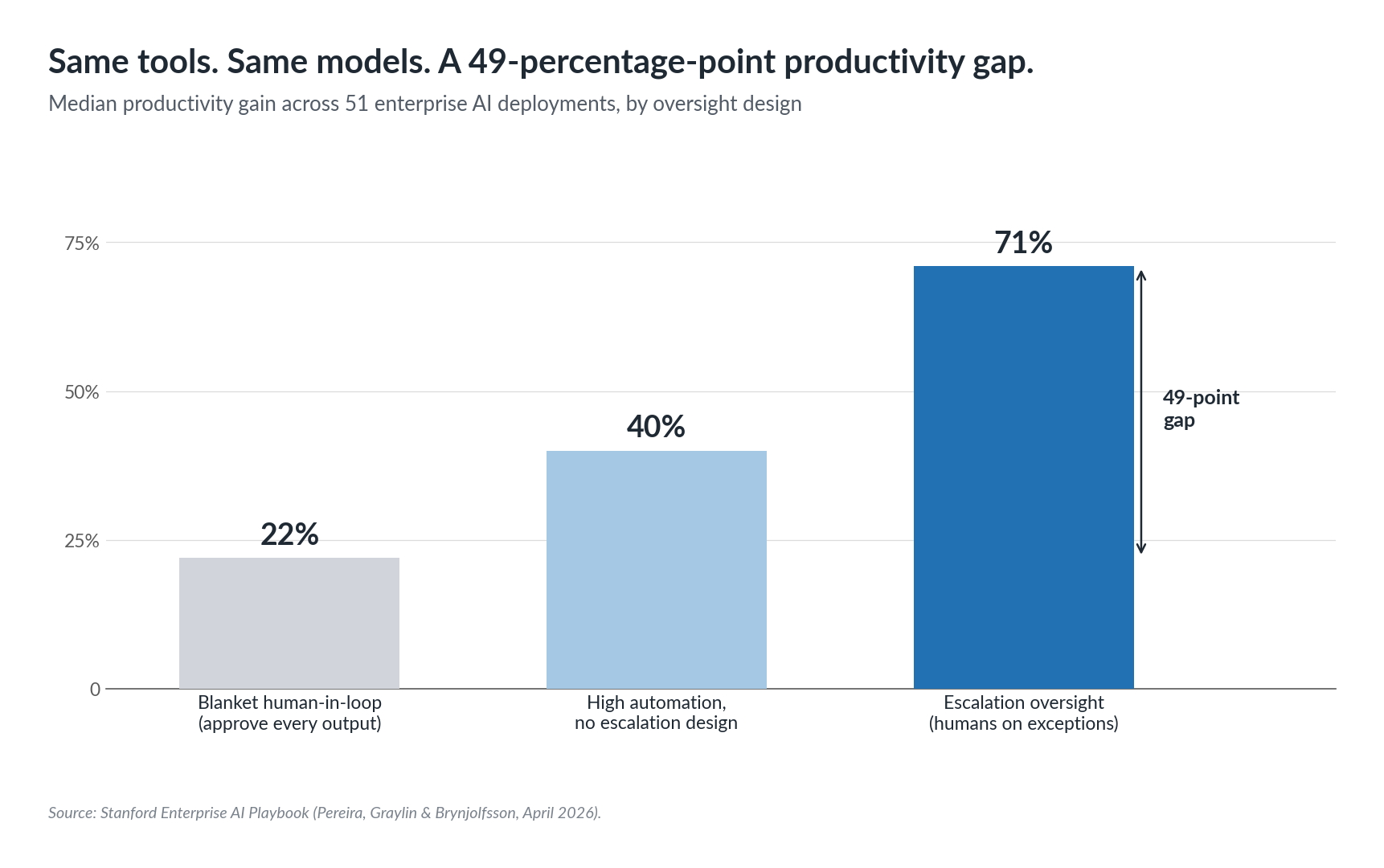
The loop converges on a written target or not at all. First attempts usually fail on scope, not capability, and every correction you keep becomes an asset no one else holds.
Rebuild the workflow.
Flag invoices where line-item variance from PO > 5%. Score: human reviews 50 random outputs / week. Threshold: loop runs alone above 90% accuracy across two consecutive weeks.
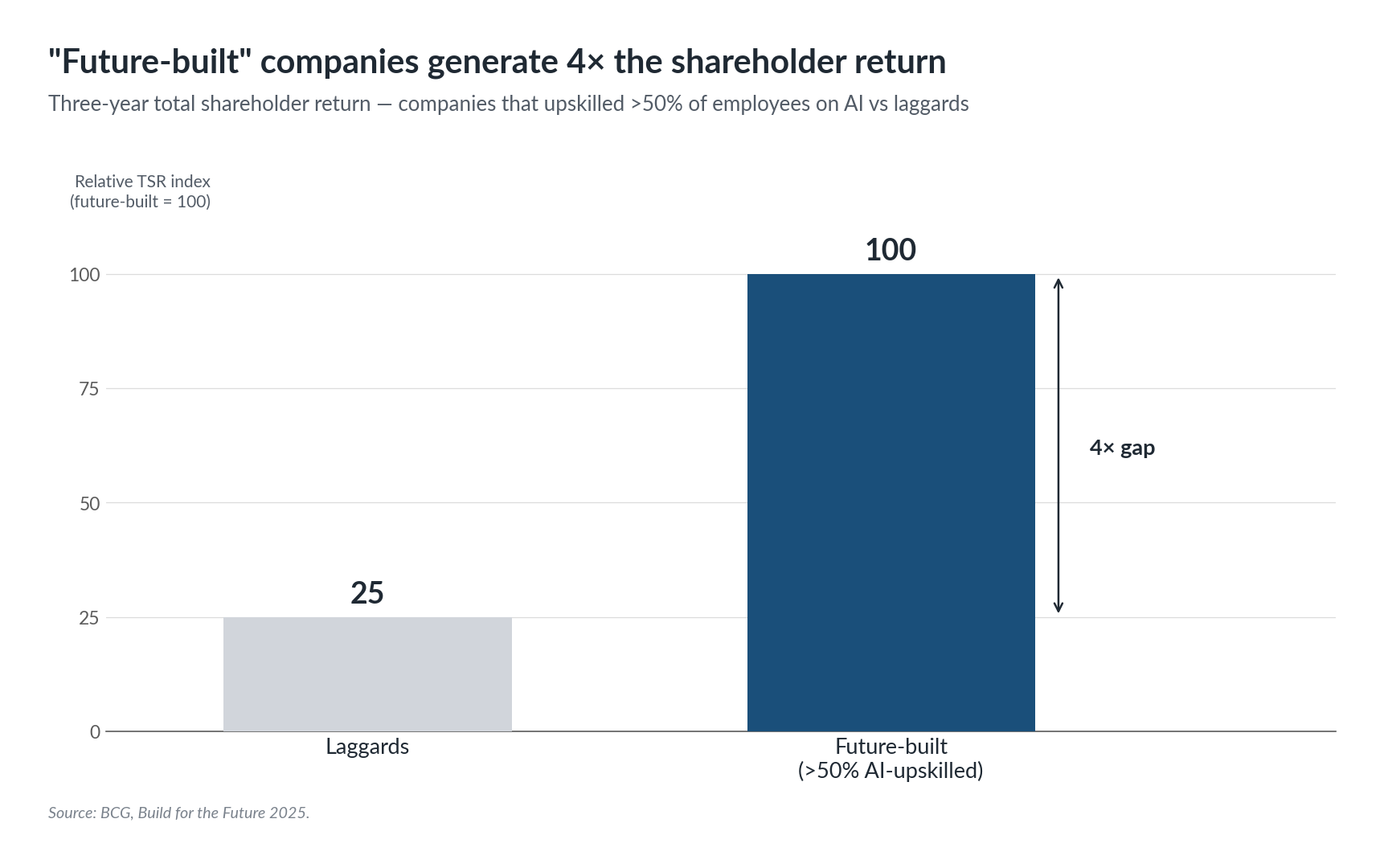
Permission and capability are both required for the work to change, and they cannot be sequenced. Access without governance is shadow AI; governance without access is theatre.
Run universal access in parallel.
Self-selection. Curiosity is not equally distributed across the org chart. Watch who uses the tools without being told. The list is information no performance review can give you.
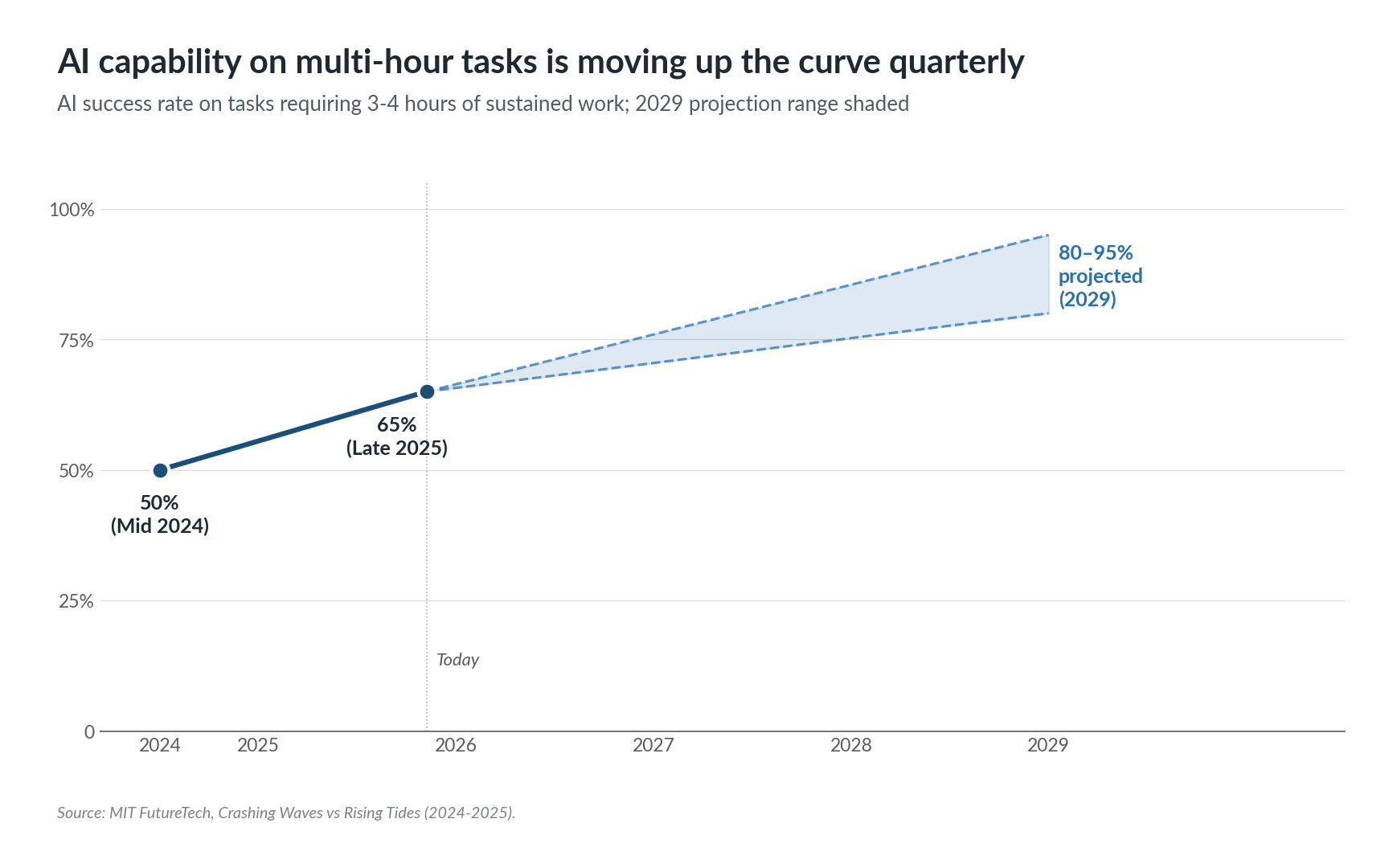
The gain is set by the slowest step, so re-rate the whole map, not the step you just fixed. Measure net, not gross.
Re-rate every major workflow.
Whether you have enough working evidence from Move 04 to make confident calls. If not, run a second Move 04 on a different workflow before scaling.
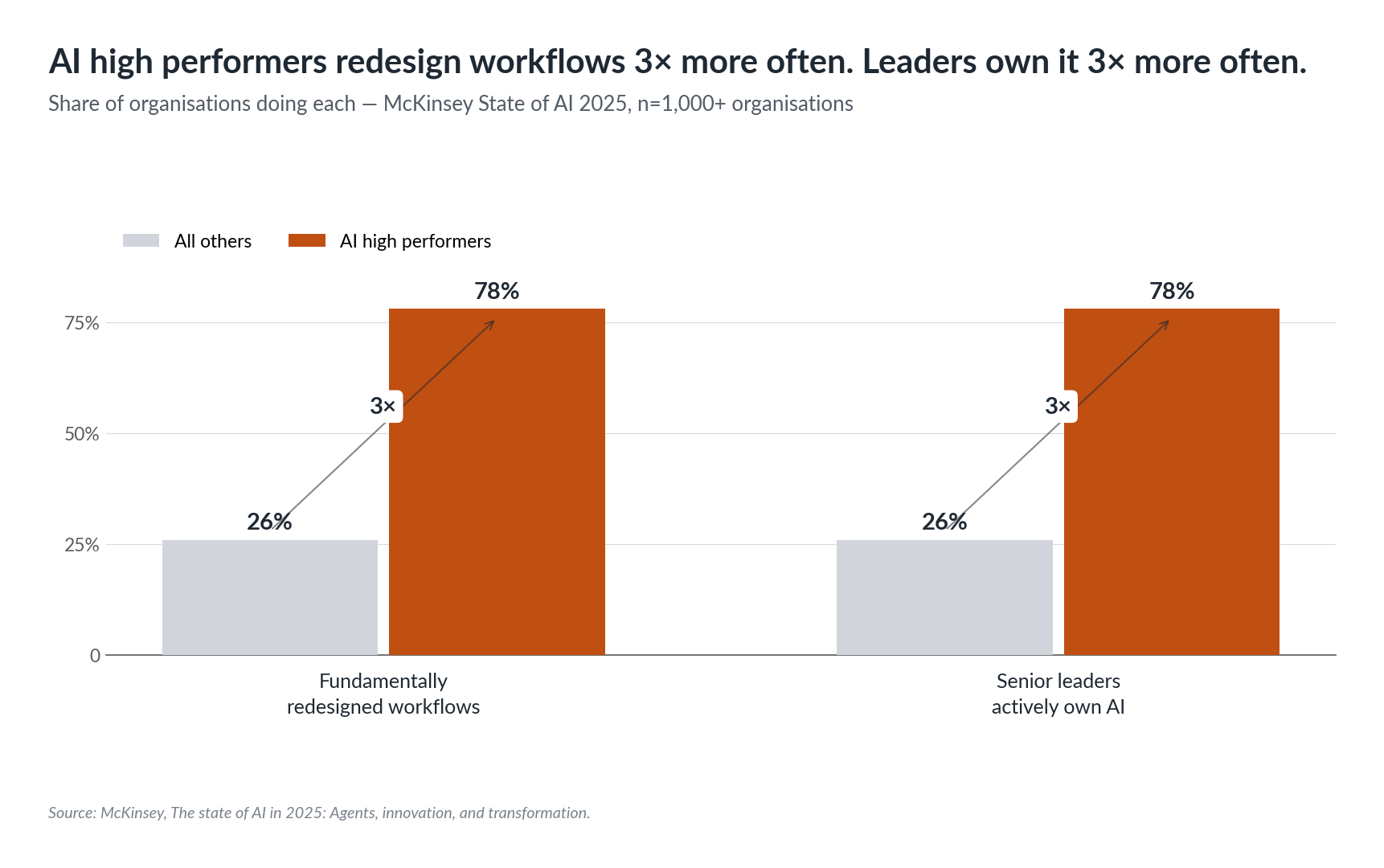
When the doing gets cheap, human leverage concentrates in writing targets, owning outcomes and keeping loops running. Three roles: name them, invest in them.
Right people. Right roles.
Whether you can name three different people and resist promoting purely from existing seniority. Old-org-chart rank is irrelevant. None of them is you.
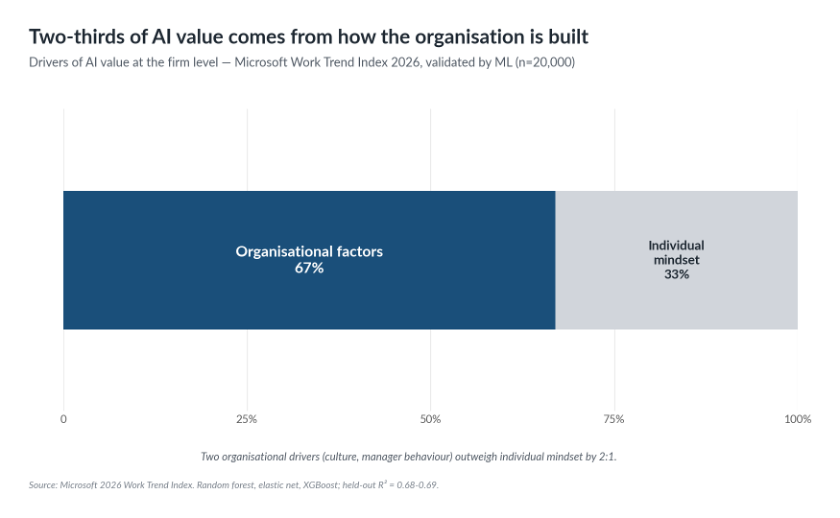
Firms exist because internal coordination was cheaper than the market. AI collapses that cost, but structure can only thin as fast as verified loops absorb the coordination. Redesign from evidence, not theory.
Redesign the structure.
Whether the redesign is forced by what you have learned, not by what you read in an article. If you cannot point to specific coordination cost that has collapsed, you are guessing.
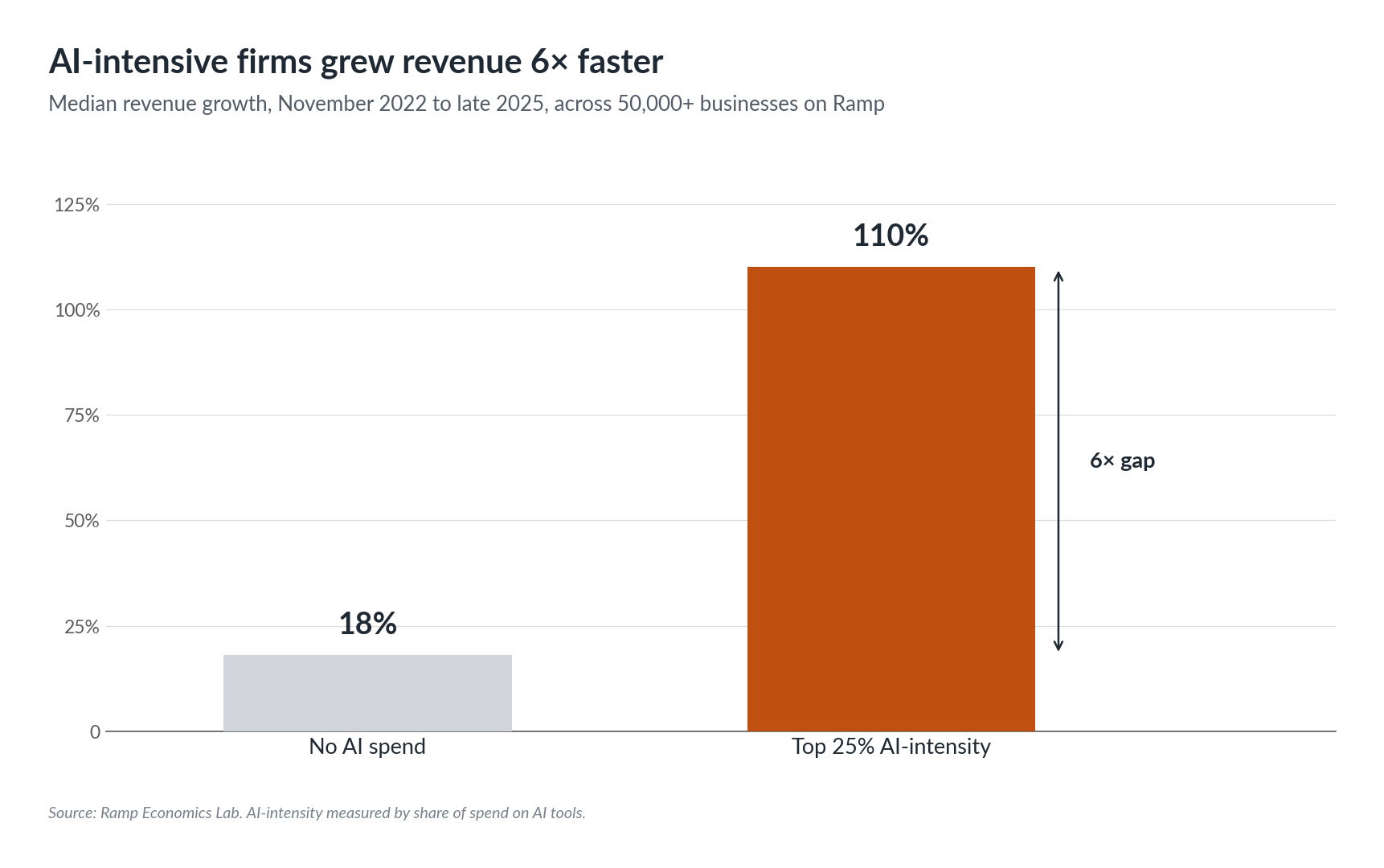
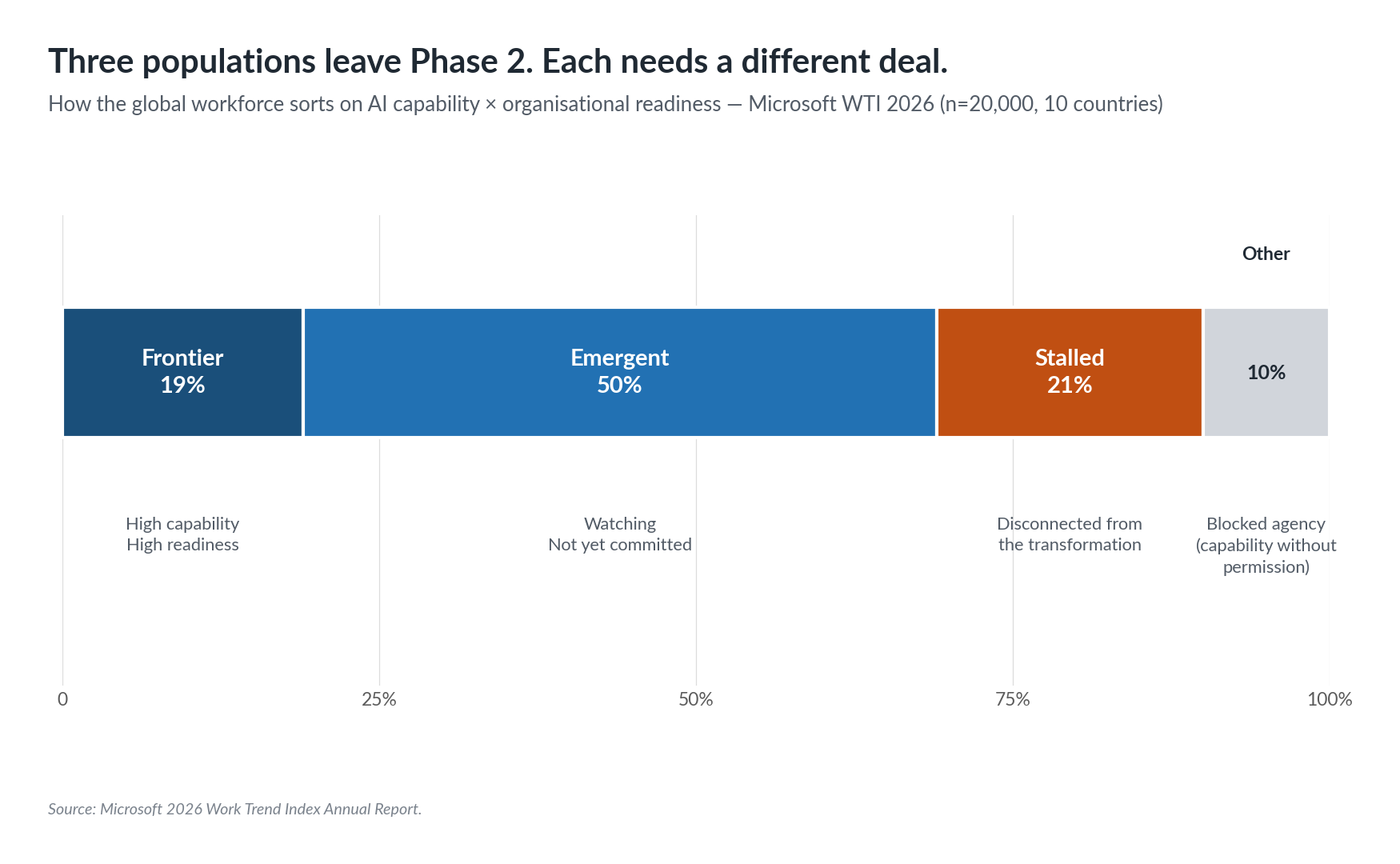
One workforce, three motivations. A single deal offered to everyone is a deal with no one; write three deals at once.
Three populations, three deals.
Whether you can write three different deals at once. Most leaders write one deal for everyone. That is the most common reason transformations fail at the human layer.
Agents fail quietly and the failure compounds. The model market moves quarterly. Governance is a capability you run continuously, never a build you finish.
Govern the agent operating layer.
Whether you can name the six functions and who owns each. If three or more sit informally with the CEO or CIO, you do not have agent ops — you have unmanaged drift.
Then it repeats.